
Case study · FMCG · Logistics
Reclaiming autonomy in massive-scale distribution.
How DNF Distribution and Logistics, Inc. shifted from fragmented, supplier-mandated reporting systems to a unified cloud-native engine controlling 1,700+ active SKUs and 5,100+ multi-tiered accounts.
- Optimized inventory data reconciliation
- Automated FIFO costing for 1,700+ SKUs
- Live credit tracking limits across 5,100 clients
- 390+ field staff posting real-time pipeline items
The baseline
DNF at a glance.
The strategic bottleneck
The supplier reporting trap.
For years, high-volume distribution entities like DNF functioned under a fragmented operational configuration. Because operations spanned multiple corporate principals—such as Unilever, Mondelez, NutriAsia, and Globe—the business was forced to operate across a patchwork of disparate, disconnected supplier-mandated software systems.
The fundamental error: These proprietary systems were engineered specifically to pass reporting data upward to the principals. They completely ignored the internal logistical realities, cost optimization requirements, and overall financial ecosystem of the distributor handling the equipment on the ground.
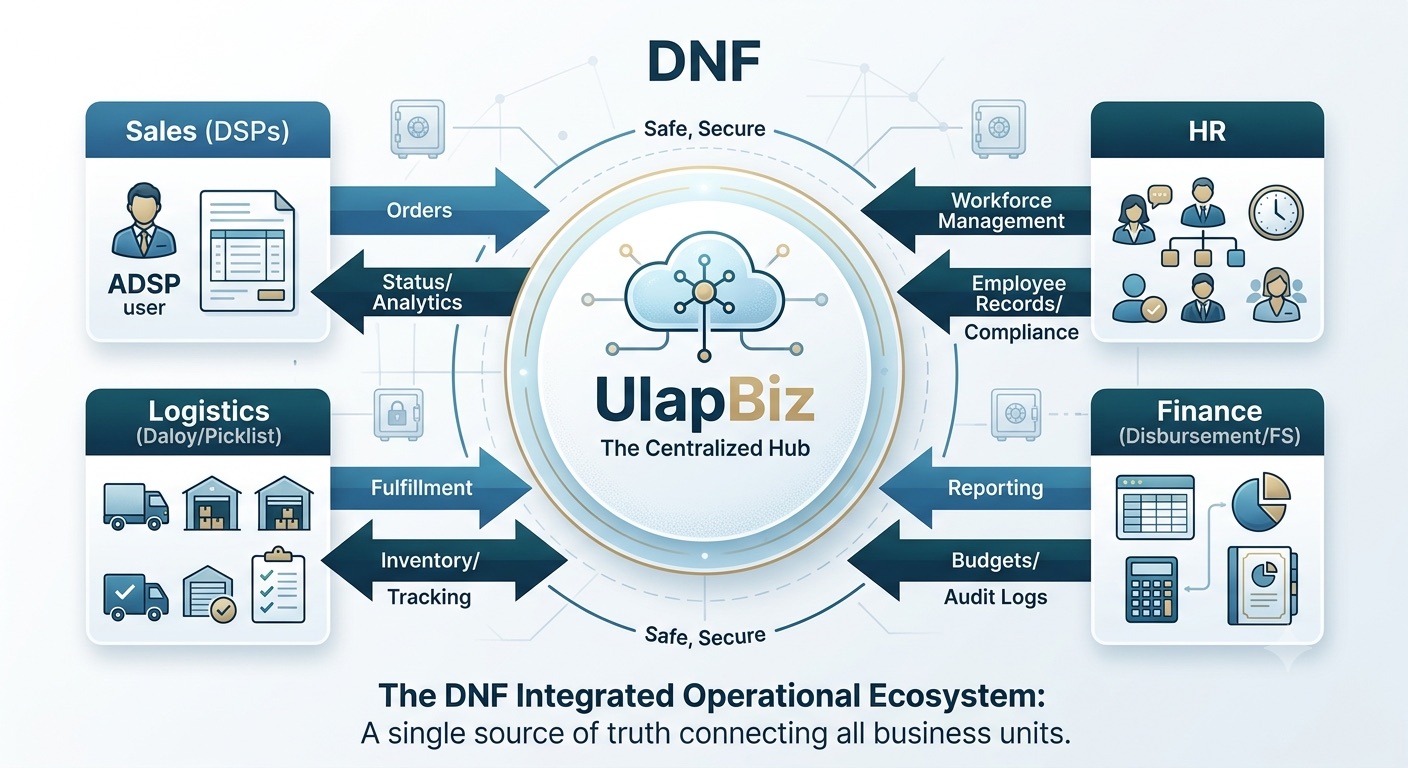
DNF was left manually matching siloed accounts, managing massive inventory tracking conflicts across split-case metrics, and blinding themselves to live credit risk exposures across 5,100 points of contact. The shift to UlapBiz was an intentional move to seize complete internal operational sovereignty.
How it works
The functional architecture.
Every core operational vertical bound directly into a shared transactional state machine.
End-to-end supply chain & FIFO valuation
UlapBiz eradicated manual tracking lag by integrating Sales Orders (SO), Purchase Orders (PO), immediate physical procurement receipts, and incoming inventory adjustments directly into a real-time ledger. To lock down true margin control across multiple distributed warehouses, the platform deploys a highly precise First-In, First-Out (FIFO) cost-tracking algorithm.
The inventory model natively distinguishes between bulk Case allocations and sub-level Secondary Case (Inner Box) quantities, managing complex FMCG bundling logic and promotional deals effortlessly.
Reverse logistics layer
Returns and Bad Orders (BO) flow directly through validation filters. When defective stock is processed at the receiving bay, credit balances and cost reductions adjust the main General Ledger instantly, eliminating year-end data reconciliation corrections.
Field digitization & credit governance
Managing 5,100 accounts across variable regional routes requires rigorous edge protection. UlapBiz links 164 dedicated Sales Personnel (DSPs) and 226 field collectors directly to core billing operations. As DSPs submit mobile orders from the field, transactions hit automatic background validation queues.
If an individual retail customer violates company-defined credit terms or breaches their credit cap, the platform triggers an automated hold order. This blocks further dispatch actions until collectors clear outstanding payments, preventing bad debt exposure.
Receivables security matrix
- Total exposure tracking
- Real-time credit balance adjustments
- Automated transaction halts on default
Predictive financial intelligence
By tying every branch asset, logistics cost, and supplier transaction directly to the central Cash Ledger, bookkeepers no longer spend weeks consolidating data. Executive teams can look at real-time Financial Statements (FS) that accurately reflect current operations.
The automated cash management layer builds forward-looking Predictive Cash Flow and Cash Position Reports, giving corporate leadership the foresight needed to manage supplier payables and capital allocations effectively.
Payroll & resource mapping
Handles a high-density team of 384 employees natively. The payroll pipeline tracks branch-specific incentives, fields allowances, and processes local regulatory deductions seamlessly alongside active logistics asset expense registers.
Stakeholder intelligence
Specialized operational views.
Data filtered deliberately for the unique demands of individual business leaders.
CEO control deck
Provides high-level macro visibility over total organizational efficiency. Consolidates total aggregate margin generation, credit collection progress indicators, and total forward receivables exposure into a clean dashboard for executive decisions.
Warehouse operations panel
Delivers live operational metrics to the warehouse floor. Tracks actual numbers for units delivered, pending sales orders awaiting dispatch validation, sales rankings segmented by individual principal, and granular returns logs organized by code category.
HR calendar & matrix
Maps workforce allocations across high-density field environments. Tracks active shifts for 164 DSPs and 226 field collectors, pairing regional route assignments directly with payroll metrics and incentive structures.
Questions
Implementation architecture FAQ.
Key technical questions about the DNF distribution framework.
How does the system calculate FIFO costs if stock moves across multiple warehouses?
UlapBiz tracks lot numbers and incoming purchase values at the global database layer while applying warehouse-specific isolation parameters. When items move between locations via a stock transfer request, the engine maintains the original procurement value to preserve absolute margin tracking integrity across the entire corporate network.
Can the automated credit block system be overridden for special customer accounts?
Yes. While the credit enforcement layer runs automatically at the edge to block unauthorized dispatches, system administrators can configure rule-based exceptions. Senior financial management can use a secure approval workflow to temporarily override an account block, creating a digital audit trail inside the system.
How are Bad Orders (BO) linked to trade supplier claims?
When field collectors or warehouse teams log damage or product expiration, the entry tracks the item back to its specific production lot and supplier origin. This automatically balances customer credits while shifting those assets into a supplier claims queue, simplifying the resolution of principal claims.
More case studies
Other businesses running on our platform.

Automotive · Retail
22 branches
Honda Ace City Corp.
Unit-level tracking of engine and chassis numbers alongside a 36-month installment receivables engine.
Read case study
Appliances · Credit
37 branches
S&J Caleon Marketing, Inc.
Twenty years of siloed offline software consolidated, scaling from 19 to 37 branches on one integrated system.
Read case studyAll company data and case details are the property of their respective organizations.
Running a network like this?
Tell us about your branches, volume and processes. We'll show you how it would run on our platform.
- sales@radztech.com
- Phone
- +63 956 896 3767